
When LLMs Grow Hands and Feet, How to Design our Agentic RL Systems?

Posted on September 5, 2025 by Jiachen Liu
TL;DR
The paradigm for training LLMs has shifted from simple-response tasks to complex, multi-step problem-solving driven by AI agents. Previous Reinforcement Learning (RL) frameworks (verl, slime, etc.) for chat LLM are not natively for this new paradigm because they can't handle the heavy computational and resource needs of agentic tasks. This blog post answers three key questions:
- How is RL for LLM-based agents different from traditional RL for chat LLM?
- What are the critical system challenges in adapting RL systems for LLM-based agents?
- What solutions are top research labs or industry developing to address these challenges?
This year, with the rise of AI agents, the frontier of AI has moved from simple-response generation toward solving complex, multi-step problems. Researchers start developing "Agentic Intelligence"—the ability to autonomously plan, reason, and act within dynamic environments. This evolution requires models that can strategize for long-horizon tasks, use tools like code interpreters and web search, and adapt based on environmental feedback.
A useful analogy is to think of LLMs as the "brain" and the LLM-based agent as the "body and hands." In the early phase of LLM development, research focused almost exclusively on the brain—refining reasoning ability. But to solve real tasks, the brain must now direct actions through a body: interacting with sandboxes, executing code, browsing the web, or running experiments. For instance, a scientific discovery agent may need to autonomously design and execute machine learning experiments on GPUs, while a coding agent must safely compile and run code inside isolated containers. This new level of capability requires RL training pipelines purpose-built for long-horizon, tool-rich, open-ended environments.
The Bottleneck: Why Existing RL Frameworks Fall Short
Simply plugging the AI agent rollout into a traditional LLM RL framework doesn't work. These frameworks were designed for simple, stateless LLM rollouts and crumble under the diverse and demanding needs of agents.
The challenge is that agents require both brain and body: while the LLM handles reasoning, the agent's "hands" involve external environments, APIs, or compute resources. Each environment may impose heavy and heterogeneous requirements:
- A coding agent needs an isolated Docker container with a specific file system and dependencies to safely execute code.
- An ML engineering agent might require dedicated GPU access and run long-running experiments.
- A web search agent …
Running even modest batches of such agents (e.g., 128 parallel rollouts) on a local node is impossible if each requires a dedicated Docker container or specialized resource. On the other hand, because of local constraints, existing frameworks run very small batches (e.g., 8), which underutilizes the LLM serving systems and slows down the agent rollout.
| Feature | Traditional LLM RL (The "Brain") | Agentic RL (The "Brain and Body") |
|---|---|---|
| Primary Goal | Optimize single‑turn language quality (helpfulness, style, safety) via preference/reward fine‑tuning. | Solve complex, multi-step problems autonomously in a dynamic environment. |
| Task Horizon | Single turn & stateless. A single prompt leads to a single response. | Multi-turn & stateful. An agent takes a sequence of actions, and its state persists across steps. |
| Interaction Model | The LLM generates text. A reward model scores the final output. | The agent uses tools, calls APIs, executes code, and interacts with external systems. |
| Resource Demand | Lightweight (prompt + reward model). | Heavyweight, diverse, and external (code interpreters, sandbox, web browsers). |
| Key System Bottleneck | LLM inference throughput and reward model scoring. | Orchestrating and scaling diverse, resource-intensive environments for parallel rollouts. |
Table 1: A comparison of system demands between LLM RL and Agentic RL.
The Decoupled Solution: Introducing the "Agent Layer"
To solve these challenges, a new system design is emerging that introduces a dedicated Agent Layer. This layer sits between the RL framework (including the inference engine and training engine) and the agent's execution environment, acting as a specialized scheduler and orchestrator for agent tasks.
- The RL Framework focuses on what it does best: training the model and serving LLM inference requests via a standard API.
- The Agent Execution Environments run independently on distributed machines, providing the sandboxes and tools the agent needs.
- The Agent Layer is the bridge. It dispatches rollout tasks to agent environments, provides them with the API endpoint for LLM inference, and collects the resulting agent trajectory to send back to a replay buffer for the trainer.
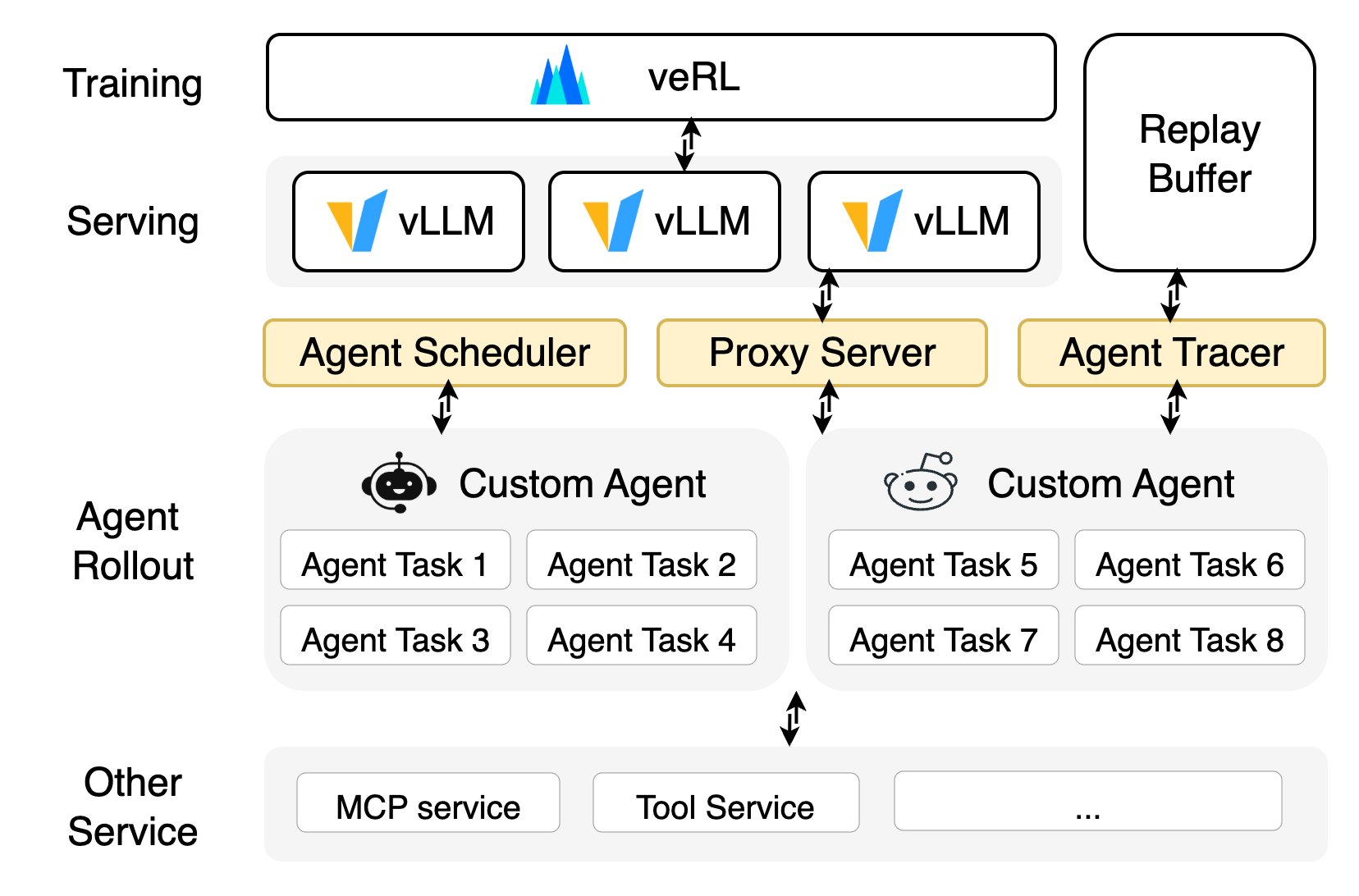 Figure 1: Conceptual Diagram of the Agent Layer in Agentic RL Systems
This decoupled architecture underpins agentic RL at scale. Below are three major challenges and emerging solutions.
Challenge 1: Integrating Diverse Agents and RL Frameworks 🧩
The performance of an agentic LLM is deeply tied to its underlying implementation—its prompting scaffold, tool integrations, and environments. A LLM trained with one agent implementation may struggle to generalize to another with a different prompt structure or tool definition. To develop generalized agentic LLMs, the RL training system must support diverse agent implementation without requiring significant code change on the agent side.
Therefore, a critical function of the Agent Layer is to automatically capture agent trajectories for any agent implementation. This is often achieved through a Unified Data Interface. By instrumenting the agent runtime (e.g., by tracing LLM API calls), the system can capture every agent's step. These structured trajectories contain the sequence of states, actions, and rewards from the agent's run.
- State: A snapshot of all critical variables in the agent's environment at a given time.
- Action: The output generated by the LLM, such as a tool call or a final answer.
- Reward: A signal indicating the quality of an action or the final outcome.
This standardized format decouples the agent's implementation logic from the RL framework. The RL framework doesn't need to know how an agent built with LangGraph works; it just consumes the standardized trajectory data. As noted in the Agent-Lightning paper, this design makes the trainer "agent-agnostic" and the agent "trainer-agnostic" [8]. Similarly, GLM-4.5 provides a unified HTTP endpoint, allowing different agent frameworks to write trajectories to a shared data pool [3]. The data pool enables tailored, task-specific filtering and adaptive sampling methods to provide high-quality RL training data for a wide range of tasks. Finally, both Kimi K2 and Kimi-Researcher use a unified, OpenAI Gym-like interface to streamline the addition of new environments and tasks [1, 2].
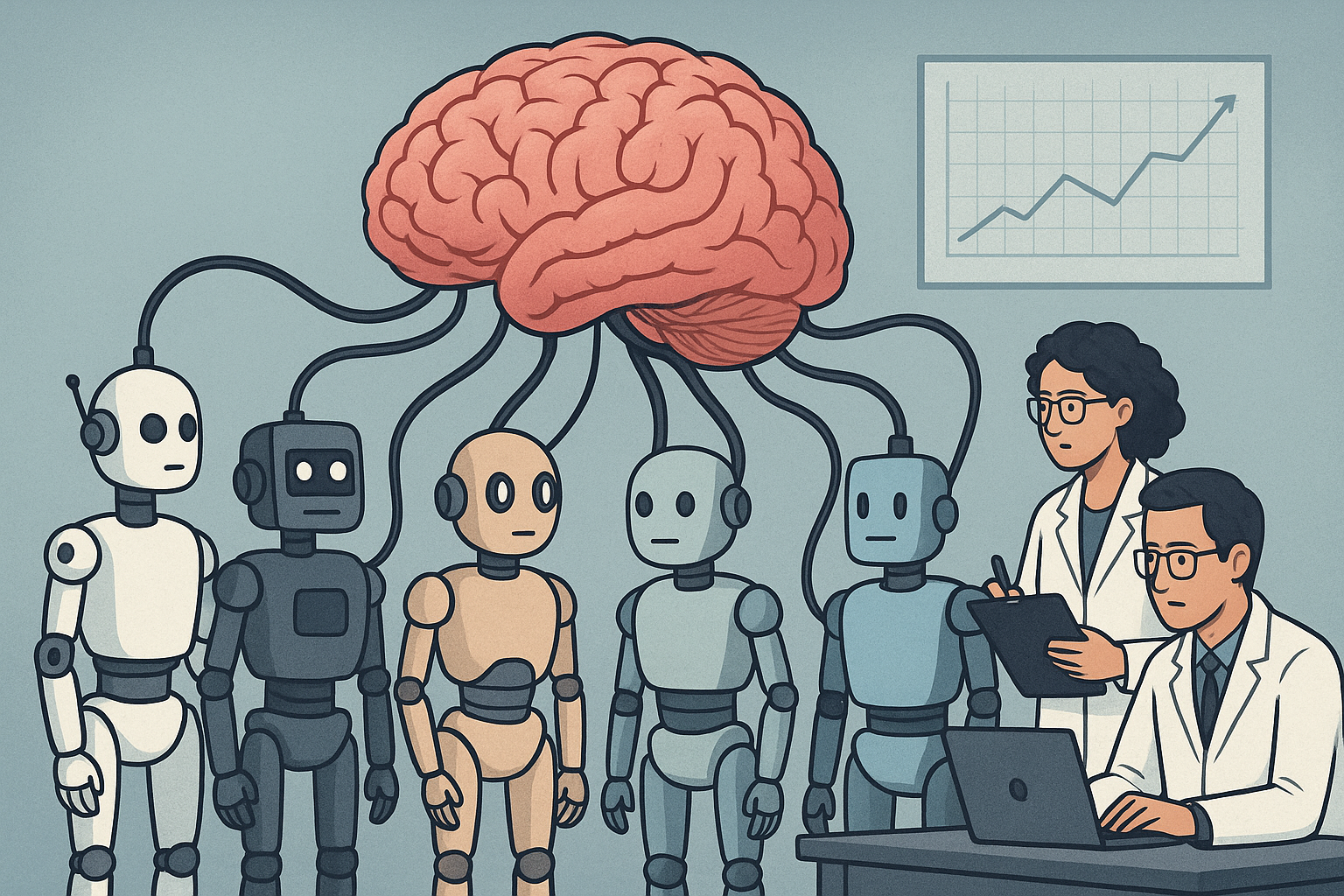 Figure 2: Generalization of Agentic LLMs.
Challenge 2: Environment Management and Agent Rollout Scalability 🖥️
Training and evaluating agentic LLMs requires massive parallel agent rollouts (e.g. rollout batch size 128 with 4 generations per prompt) across simulated or real environments. Unlike RL for LLM, agentic RL often involves complex, dynamic environments such as sandboxed simulators, external APIs, or sandboxed real-world interfaces, all of which demand careful orchestration of resources. Managing thousands of concurrent environments introduces difficulties in distributed scheduling, state checkpointing, fault tolerance, and reproducibility.
The solution is to offload agent task execution to a dedicated, isolated service that runs separately from the RL training loop.
- Remote Execution Services: Systems like rStar2-Agent and SkyRL use a master/worker architecture where the RL trainer acts as a master and offloads agent tasks to a fleet of worker nodes [5, 6].
- Sandbox Orchestration: Daytona provides a specialized sandbox infrastructure that can spin up thousands of isolated environments on demand, ensuring that each agent rollout is safe and reproducible [11].
- Resource-Aware Scheduling: AgentFly introduces a resource-aware scheduler that optimizes the placement of agent tasks based on their specific compute and memory needs, maximizing throughput [9].
Figure 3: Scaling Agentic RL.
Challenge 3: Efficient Communication and Data Flow 🚀
The multi-step nature of agentic tasks creates a significant communication overhead between the LLM, the agent layer, and the environment. Each step involves sending the current state to the LLM, receiving an action, and then updating the environment. In a large-scale RL training setup, this can lead to massive data transfers and latency bottlenecks.
To address this, researchers are developing optimized communication protocols and data flow architectures.
- Asynchronous Rollouts: Instead of waiting for all agents to complete their tasks, systems like rLLM and Agent-Lightning use asynchronous rollouts, where the trainer can start processing completed trajectories while others are still running [13, 8].
- State Compression: To reduce data transfer, some systems use state compression techniques, only sending the changes (deltas) between steps instead of the full environment state.
- Local Caching: Agent environments can cache frequently used data or model weights locally to minimize external API calls and reduce latency.
Figure 4: Optimizing Communication in Agentic RL.
Conclusion
The shift toward agentic intelligence is fundamentally changing how we train and deploy LLMs. By introducing a decoupled Agent Layer and addressing the challenges of integration, scalability, and communication, we can build robust and efficient RL systems that empower LLMs with the "hands and feet" they need to solve real-world problems.
References
- Kimi K2: Open Agentic Intelligence.
- Kimi-Researcher: End-to-End RL Training for Emerging Agentic Capabilities.
- GLM-4.5: Agentic, Reasoning, and Coding (ARC) Foundation Models.
- AgentFly: Extensible and Scalable Reinforcement Learning for LM Agents.
- rStar2-Agent: Agentic Reasoning Technical Report.
- Daytona: Sandbox Infrastructure for Reinforcement Learning Agents.
- SkyRL: Train Real-World Long-Horizon Agents via Reinforcement Learning.
- Agent Lightning: Train ANY AI Agents with Reinforcement Learning.
- rLLM: A Framework for Post-Training Language Agents.